
Need For Renewables
Energy security
The recent shocks that European economies have faced, from the Covid-19 panemic in 2020, to the invasaion of Ukraine in 2023 and now the rewriting of global alliances and diplomacy across the western world, are having a lasting maker on Europe and are hightlighting certain vulnerabilities. One of these vulnerabilities is energy security.
Most European countries can generate electricity from multiple sources i.e. gas, nuclear and renewables. The also have a greater interconccetion of supply lines across the continent which seamlessly transfer energy across borders. However, Ireland is much more vulnerable. Energy prices in Ireland are among the highest in Europe, largely due to the fact that Ireland gernerates roughly 40% of its electricity from imparted gas. Irelan dis also the only country in the EU with no domestic gas storage facilities. It is predicued that if one of the two gas piplines in the Irish sea were damaged by foreign aggressors, it would cause rolling electricity blackouts across the island and would take at least 6 months to repair which would have significant economic impacts. It is predicted that homes, hospitals, airports, universities, and roughly 250 lareg industrual plants (including in the pharmaceutical, dairy and manufacturing sectors) would lost electricty supply for several months. It is estimated that a 30-day electricity outage alone would cost the Irish economy an estimated €4.6 billion.
Becoming energy independent and self-sufficient is a long-term and smart investment in Ireland's economic, environmental and social well-being. Renewables are the cheapest way to ensure Ireland's energy security, while also reducing Green House Gas emissions, the main contributor of the Climate Crisis.
Cheapest form of energy
In Ireland, onshore wind energy is the cheapest form of energy, and the benefits are felt most by Irish consumers. In a report published this year, it is estimated that between 2000 and 2023, onshore wind farms saved Irish electricity consumers nearly €840 million and, between 2020 and 2023, cut bills by an average of €320 per person. According to the Renewable Power Generations Costs in 2023 report by the International Renewable Energy Agency: “...the global weighted average LCOE of new onshore wind projects was 67% lower than the weighted average fossil fuel-fired alternative’’.
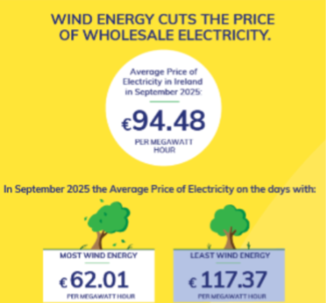
In September 2025, the average wholesale electricity price in Ireland was €94.48, but this fell to €62.01 on windy days and rose to €117.37 when we relied on imported fossil fuels.
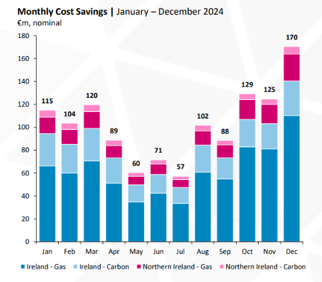
In 2024 alone Irish wind farms displaced a total of €1.2 billion in imported gas and carbon credits. This means that by producing our own renewable wind energy at home, we are also getting the added benefits of more jobs and revenue staying in Ireland. Wind energy supports our own economy and jobs sector.
Ireland is currently facing EU fines of up to €28 billion in 2030 — around €5,600 for every person in the country — for failing to meet its legally binding climate targets. However, if we invest now in renewable energy, sustainable transport and cleaner homeheating solutions, we can avoid these penalties and save billions that would otherwise be lost/wasted.
Did you know: The total energy generation from renewables in Ireland was 39.8% in 2024. *
Climate Crisis
The continured use of fossil fuels is the primary driver of climate change. Despite their harmful effects to our biosphere, Irish taxpayers subsidised this industry by over €4.7bn in 2024 alone. Despite the progress we have made in renewables, Ireland still relied on fossil fuels for 80% of its energy use in 2024. This over reliance on fossil fuels is expensive and extremely harmful to the environment, especially when electricity demand is set to increase in Europe by 140% by 2050. Increased electrification, with things like electric cars and heat pumps, will help limit global warming – but with this we also need cleaner more affordable methods of generating this electricity.
The climate crisis is often considered as two twin interrelated crises: global warming, cause by CO2 in the atmosphere largely driven by fossil fuels, and the biodiversity crisis, which has seen the majority of wild animal populations in serious decline and with many facing extinction. In the WWF’s Living Planet Report 2024, for example, shows that the average size of wildlife populations fell by 73% between just 1970 and 2020. In Ireland, one fifth of breeding birds are in long decline, over 20 per cent of wild bee species are threatened with extinction, and over half of native Irish plant species have declined in range and abundance. (source)
We need to tackle each of these aspects of the crisis together if we have any hope of minimising the dangerous impacts of climate change and securing a healthy planet for future generations.
Wind turbines and solar panels have a much lower environmental impact compared to fossil fuel generation, as they produce no air or water pollution during operation. Additionally, careful planning ensures that there are minimal effects on wildlife and habitats, and that biodiversity enhancement measures are a key aspect in securing planning permission (Source). At Statkraft, one of our key objectives is the concept of Biodiversity Net Gain (BNG), which ensures that the natural environment surrounding our projects is left in a better condition as regards habitat and biodiversity than before the development began.
Realising what the climate crisis will mean for Ireland
Global warming is already having impacts across the world, with increased wildfires, flooding and drought, and Ireland is not immune. The EPA has developed reports which predict the climate change consequences for Ireland over the coming years. See here for more info: https://www.epa.ie/publications/research/epa-research-2030-reports/research-471-updated-high-resolution-climate-projections-for-ireland.php
One of the biggest consequences will be sea level rise, you can check how your local area will be affected by sea level rise here
Ireland’s economy and public finances will also be significantly affected by the climate crisis. In 2024, extreme weather caused €2.5 billion in economic damages, a figure which is predicted to increase as the climate crisis worsens. Since 2022, the cost of climate change has risen by eight percent per year according to the Climate Change Advisory Council and The Central Bank of Ireland (source).
Ireland emits a lot of carbon per head of population, but sadly it is countries in the developing world which will bear the brunt of the climate crisis despite their significantly lower emissions per capita. We have a responsibility to developing states to ensure that our choices and actions don’t harm those most vulnerable. It will become an intergenerational failure of Irish society if we do not break our reliance on fossil fuels now.