
Why We Need Renewables

Energy Security
The recent shocks that European economies have faced, from the Covid-19 pandemic in 2020, to the invasion of Ukraine in 2023 and now the rewriting of global alliances and diplomacy across the western world, are having a lasting mark on Europe and are highlighting certain vulnerabilities. One of these vulnerabilities is energy security.
Most European countries can generate electricity from multiple sources i.e. gas, nuclear and renewables. They also have a greater interconnection of supply lines across the continent which seamlessly transfer energy across borders. However, Ireland is much more vulnerable. Energy prices in Ireland are among the highest in Europe, largely due to the fact that Ireland generates roughly 40% of its electricity from imported gas. Ireland is also the only country in the EU with no domestic gas storage facilities. It is predicted that if one of the two gas pipelines in the Irish sea were damaged by foreign aggressors, it would cause rolling electricity blackouts across the island and would take at least 6 months to repair which would have significant economic impacts. It is predicted that homes, hospitals, airports, universities, and roughly 250 large industrial plants (including in the pharmaceutical, dairy, and manufacturing sectors) would lose electricity supply for several months.
It is estimated that a 30-day electricity outage alone would cost the Irish economy an estimated €4.6 billion.
Becoming energy independent and self-sufficient is a long-term and smart investment in Ireland’s economic, environmental and social well-being. Renewables are the cheapest way to ensure Ireland’s energy security, while also reducing Green House Gas emissions the main contributor of the Climate Crisis.
Cost of Living
In Ireland, onshore wind energy is the cheapest form of energy, and the benefits are felt most by Irish consumers. In a report published this year, it is estimated that between 2000 and 2023, onshore wind farms saved Irish electricity consumers nearly €840 million and, between 2020 and 2023, cut bills by an average of €320 per person. According to the Renewable Power Generations Costs in 2023 report by the International Renewable Energy Agency: “...the global weighted average LCOE of new onshore wind projects was 67% lower than the weighted average fossil fuel-fired alternative’’.
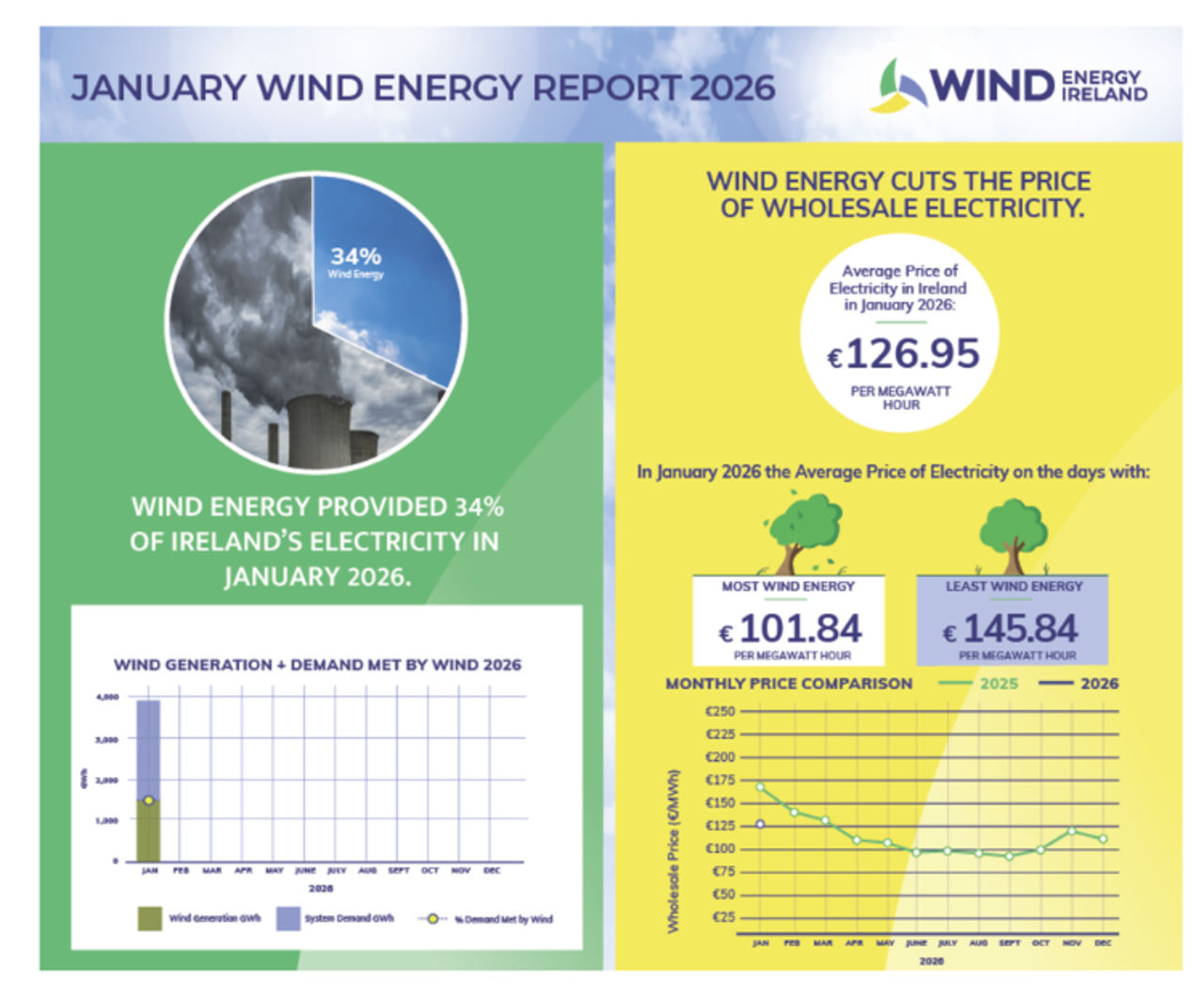
In January 2026, the average wholesale electricity price in Ireland was €126.95, but this fell to €101.84 on windy days and rose to €145.84 when we relied on imported fossil fuels.
In 2024 alone Irish wind farms displaced a total of €1.2 billion in imported gas and carbon credits. This means that by producing our own renewable wind energy at home, we are also getting the added benefits of more jobs and revenue staying in Ireland. Wind energy supports our own economy and jobs sector.